
“When information is missing, trust disappears as well”
At Pemota Consultancy, we have been involved in quite a lot of divestitures lately. Previously, we outlined five essential points for a successful divestiture. Successful for the employees as well as for the seller and the buyer. When CPW, a joint venture of General Mills and Nestlé, recently decided they had to cut back on their cereal production facilities in France and the UK, this started an emotional rollercoaster for its workforce.
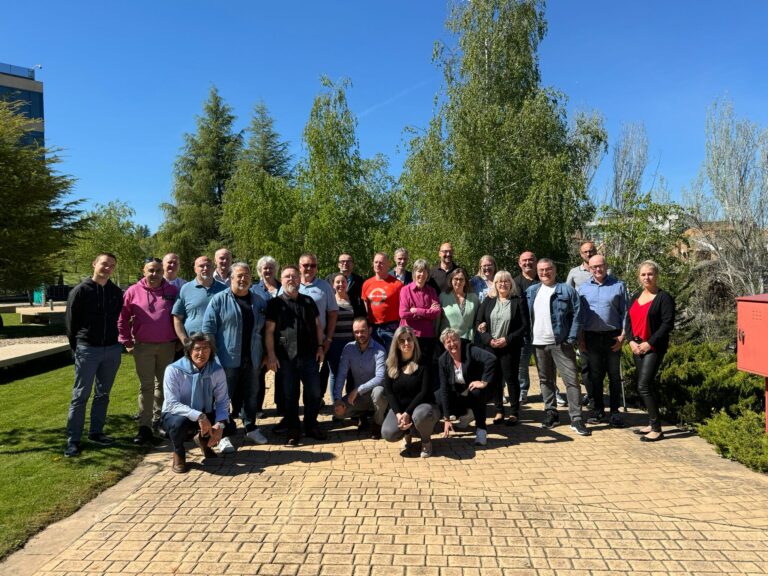
In a meeting with some representees of CPW’s Employees’ Consultative Forum (ECF) in the UK, they shared with us the employees’ perspectives on the ongoing divestiture process:
Shock and surprise
“Strange as it may seem, the announcement of plans to downsize the production in the UK didn’t come out of the blue. Over the last several years we have seen declines in the overall production volumes in the UK as well as in Europe. That’s why, as ECF, for the last three years we have been asking for more details on what was happening with the business. Unfortunately, during all that time, our management had not been able to share many details.”
“Even though we knew the business outlook wasn’t all that good, the announcement that the company wanted to close our production plant did come as a bit of a shock. We have got two sites in the UK: one in Bromborough (near Liverpool) and one in Staverton (near Bath). For us, it was actually a big surprise to hear that it was the Bromborough plant that was due to be closed. Surprising, as we still had a significant production going on, with the Nestlé brands as well as with private label production.”
The initial announcement, in March this year, involved the complete closure of the Bromborough site. Just a few months earlier, CPW announced a strategic review for of its Itancourt site in France.
Consultation and counter proposals at the local level
“We didn’t expect it would be easy to find a new buyer. Therefore, as part of the official and legally required consultation process, we wanted to come up with a counter proposal to keep Bromborough open. This was clearly a sensitive and complex task, as any proposal from our side might have serious staff impact for the other UK factory. As we had to make Bromborough viable without the private-label market, we tried to come up with a cost-neutral way to bring other Nestlé products to the Bromborough site.”
“After consultation was closed for any counter proposals, we reluctantly had to accept that the company’s proposal to move the brand production to Staverton, was the only viable option. It was then – in August – that we learned there actually were other interested parties that were looking to buy the site in some way or other. Unfortunately, again, we had a very hard time getting enough information.”
Anger and emotions
“As a trade union group, representing the employees here, we had to put any anger or emotion aside. There was a lot of frustration among the employees, and we as ECF, were kind of stuck in the middle. Obviously, our goal was to retain jobs for our people. And should we get angry, that wouldn’t necessarily help that process. Therefore, we remained constructive.”
“Once we got into the summer, we started seeing people leave. That’s when we managed to convince the company that they had to address that. This resulted in the offering of a retention bonus. We feel that if they hadn’t done that, they might not have had a business to sell at all, because people would have just stopped turning up.”
“At the very moment CPW announced that they had found a buyer, the employees were at the end of their tether. And even then, CPW management still wasn’t very forthcoming with information.”
Private Equity
“One of our worse-case scenarios had always been ‘private equity’: a firm that would come in, strip assets, and flip the business, not caring about the employees in that process. Therefore, when it finally turned out to be private equity that was interested in buying the site, there was a lot of uncertainty again, fear even, primarily because we had so little information.”
“Even though we now know who the buyer is – Ecco Group – there is still a lot that we don’t know. It’s a complicated process and the parties involved only share the final outcomes. So, we’re still having to rely on trust here.
What we now hear, sounds feasible and plausible: that there is a plan, and that there is potential for growth. But until people see that in practice, people are going to feel concerned and nervous about the future. That’s a legacy that will probably to some extent carry over from CPW to the Ecco Group.”
“The anger and fear haven’t subsided yet. And eventually, we might run out of time. Taking industrial action to force things along, wouldn’t be good for anyone. So far, at the ECF we have been able to keep the peace and remain constructive. But if we don’t get satisfactory outcomes, then the mood might still shift.”
New ownership needs knowledge and expertise
“We believe CPW management should acknowledge the hard work and loyalty their workforce here has shown over the years and do something to support that. Not just saying it but acting upon it. After all there are a lot of people involved here, not just the workers and their families, but a whole chain of industries.”
“And the new owners — they’re not just buying equipment. What they’re really buying is the knowledge, experience, and skills of the employees. Our people are truly engaged. It’s more important for all of us that this business is successful than it probably is for the other parties involved. After all: we’re the ones with families that all depend on the survival of this plant.”
Why information Matters
This conversation with the UK colleagues makes one thing unmistakably clear: information is not a courtesy, it is the basis for trust.
When employees are given timely, factual and consistent updates, they can engage constructively, weigh options, and help shape solutions. When information is withheld, uncertainty fills the space instead, and trust is gone.
In every divestiture, the process stands or falls with transparent communication. Employers who recognise this early avoid unnecessary fear, frustration, and conflict – and give their people the respect they deserve at one of the most vulnerable moments in their working lives.